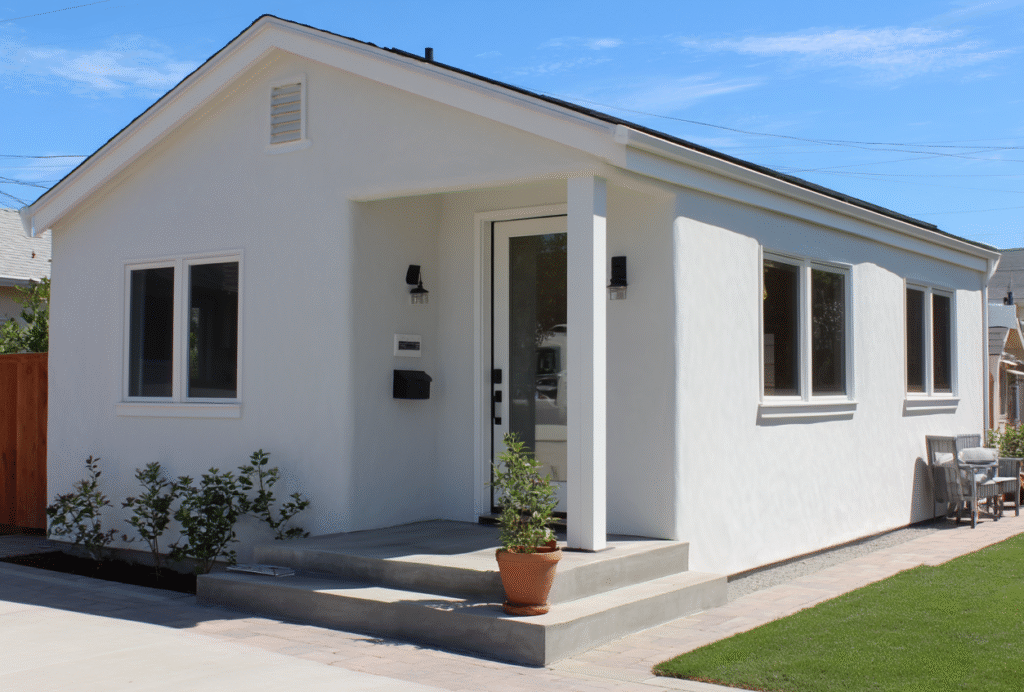
Building an ADU represents a significant financial investment, typically requiring $100,000-$300,000 depending on size, features, and location. Unlike traditional construction, where costs accumulate gradually over months, ADUs often require substantial upfront payments for factory construction before delivery.
Understanding financing options specific to ADU projects helps homeowners secure appropriate funding while avoiding expensive mistakes or unsuitable loan products that strain budgets.
Financing Options for an ADU
Home Equity Loans and HELOCs
Home equity loans and home equity lines of credit (HELOCs) represent the most common financing methods for ADU homes. These options leverage your existing property equity to fund construction without requiring separate property as collateral. Home equity loans provide lump-sum amounts with fixed interest rates and consistent monthly payments, ideal when you know exact project costs upfront.
HELOCs function like credit cards secured by your home, allowing you to draw funds as needed up to your credit limit. This flexibility suits projects where costs might vary or unfold over time. Interest rates typically start lower than home equity loans, but are variable, meaning payments can increase if rates rise. Both options usually offer better rates than personal loans because your home secures the debt.
Most lenders require 15-20% equity remaining in your home after the loan, meaning you can typically borrow up to 80-85% of your home’s value minus your existing mortgage balance. Interest on amounts up to $100,000 is generally tax-deductible, providing additional financial benefit.
Construction Loans
Construction loans specifically fund building projects, releasing funds in stages as construction progresses rather than as lump sums. While designed primarily for traditional construction, some lenders offer construction loans for ADU projects, though terms vary significantly by lender and project specifics.
These loans typically require converting to permanent mortgages after construction is complete. Interest rates run higher than traditional mortgages, and you’ll pay interest only during construction before converting to regular principal-and-interest payments. Construction loans require detailed plans, contractor information, and project budgets before approval, making them more involved than simple home equity borrowing.
Personal Loans
Personal loans offer quick access to funds without using your home as collateral. This protects your home equity and avoids placing liens on your property. However, personal loans typically carry higher interest rates (6-15% or more, depending on credit) and shorter repayment terms (3-7 years) than secured loans, resulting in higher monthly payments.
Personal loans make sense for smaller ADU projects or as supplementary funding, bridging gaps between primary financing and total project costs. They work particularly well if you have excellent credit,t qualifying for competitive rates but lack sufficient home equity for equity-based borrowing.
FHA and VA Loans for ADUs
Some government-backed loan programs support ADU construction. FHA 203(k) rehabilitation loans fund property purchases plus renovation or construction costs in single mortgages. While primarily for primary residence improvements, they can finance ADU construction when adding the ADU to your primary residence property.
VA loans offer similar benefits for qualifying veterans and service members. Some VA products allow financing for property improvements, including ADU construction. However, both FHA and VA loans involve specific requirements, paperwork, and approval processes more complex than conventional financing. Consult with lenders experienced in these programs to determine eligibility and suitability for your ADU project.

Understanding the Costs of Building an ADU
Typical Costs of ADUs
The ADU cost varies significantly by size, features, and location. Basic studio or one-bedroom units start around $100,000-$150,000. Larger two-bedroom units with full amenities typically cost $150,000-$250,000. Luxury ADU for sale options with premium finishes, larger footprints, and advanced features can exceed $300,000.
These figures represent total project costs, including the unit itself, site preparation, foundation, delivery, installation, utility connections, permitting, and finishing work. The structure typically represents 60-70% of total costs, with site work and connections comprising the remainder.
Additional Costs Beyond the Build
Beyond the unit and installation, budget for permitting fees ($2,000-$10,000), utility connections ($5,000-$20,000), site preparation and foundation work ($10,000-$30,000), landscaping ($2,000-$10,000), and design/engineering fees ($3,000-$10,000). These costs vary by location and site conditions but add 25-40% to the unit’s base price.
Also consider ongoing costs, including property tax increases (typically 10-20% of pre-ADU taxes), increased homeowner’s insurance ($300-$1,000 annually), and utilities if you’re covering them. If renting the ADU, maintenance reserves of 1-2% of the unit’s value annually prevent surprise repair expenses.
Financing the Full Cost of a ADU
Many homeowners underestimate total project costs by focusing on the unit price while overlooking site work, connections, permits, and finishing. Secure financing covering complete project costs plus 10-15% contingency for unexpected expenses. Running out of money mid-project creates serious problems—incomplete ADUs generate no rental income while still incurring costs.
Create detailed budgets itemizing all expenses before seeking financing. Lenders want comprehensive cost breakdowns when approving loans. Detailed budgets also prevent you from borrowing insufficient amounts, then scrambling for additional funding mid-project at potentially unfavorable terms.
How to Evaluate Lenders and Compare Financing Terms
Researching Lenders for ADU Financing
Not all lenders finance ADU projects, and fewer still understand construction specifics. Start by contacting your existing mortgage lender—they know your payment history and may offer favorable terms. Credit unions often provide competitive rates and personalized service, though lending criteria can be strict.
Online lenders offer convenience and quick approval,s but may lack personal service. National banks provide stability and resources, but sometimes have rigid criteria. Local banks and mortgage brokers often show more flexibility with non-traditional projects like modular ADUs.
Comparing Loan Terms and Rates
Interest rates obviously matter, but loan terms include other critical factors. Compare annual percentage rates (APRs), including all fees rather than just interest rates. Examine closing costs, origination fees, appraisal requirements, and prepayment penalties.
Loan terms affect monthly payments significantly. A 10-year term creates higher monthly payments than 20 or 30 years but saves substantially on total interest. Balance affordable monthly payments against total interest costs over the loan’s life.
Fixed versus variable rates represent another consideration. Fixed rates provide payment certainty,y while variable rates might start lower but carry the risk of increases. For long-term loans, fixed rates often make sense despite potentially higher initial rates.
The Importance of a Down Payment
Most lenders require down payments for ADU financing, typically 10-20% of project costs. Larger down payments reduce borrowed amounts, lower monthly payments, may eliminate mortgage insurance requirements, and often qualify you for better interest rates.
However, down payments reduce available cash for other purposes. Balance the benefits of larger down payments against the need for emergency funds, other financial goals, and maintaining adequate liquidity. Don’t commit every dollar to your ADU, leaving yourself cash-poor and vulnerable to unexpected expenses.

Tips for Staying Within Budget When Financing a ADU
Creating a Realistic Budget
Detailed, realistic budgets prevent financial stress during construction. List every expense category: unit cost, delivery, foundation, installation, utility connections, permits, landscaping, furnishings if renting, and contingency funds. Research actual costs rather than guessing—contact manufacturers, contractors, and local permit offices for accurate figures.
Include soft costs like architectural plans, engineering, and loan fees. These often-overlooked expenses add $5,000-$15,000 to projects. Budget realistically rather than optimistically—construction typically costs more and takes longer than planned.
Monitoring Progress and Controlling Costs
Once construction begins, monitor expenses against the budget continuously. Request regular updates from contractors about costs and timeline. Address budget deviations immediately rather than discovering overruns at project completion when options are limited.
Change orders—modifications to original plans—represent major budget threats. Every change typically costs 20-50% more than if included initially due to rework and coordination. Minimize changes by thoroughly planning before construction starts. When changes are necessary, get written quotes before approving work.
Leveraging Tax Credits and Deductions
Several tax benefits can offset ADU costs. Mortgage interest on home equity loans used for substantial home improvements is generally tax-deductible up to certain limits. If renting your ADU, various expenses, including depreciation, repairs, utilities, and insurance, become deductible against rental income.
Some jurisdictions offer tax credits or rebates for energy-efficient construction or affordable housing creation. Research local and state programs that might reduce effective costs. Solar installation on your ADU might qualify for federal tax credits,s substantially reducing system costs.
Key Financing Considerations Checklist
Before financing your ADU, evaluate:
- Your home’s current equity and borrowing capacity
- Credit score and qualification for competitive rates
- Complete project costs, including contingency funds
- Monthly payment comfort relative to income
- Loan terms comparing fixed versus variable rates
- Lender experience with ADU and construction
- Down payment amounts and impact on liquidity
- Tax implications and potential deductions
- Expected rental income if applicable
- Long-term plans and whether refinancing makes sense later
Final Thoughts
Financing a ADU requires careful planning, research, and budgeting to ensure your investment aligns with financial goals while avoiding overextension. The various financing options—home equity loans, HELOCs, construction loans, personal loans, and government-backed programs—each offer different benefits and drawbacks depending on your specific situation.
Understanding the ADU cost completely, including all site work, connections, permits, and soft costs, prevents underestimating required financing. Comparing multiple lenders and loan products ensures you secure favorable terms rather than accepting the first approval received.
If you are considering downsizing your lifestyle, many buyers today are exploring tiny homes in Orlando because of the warm climate and affordable land options. At Goshen Tiny Homes, we design a variety of modern tiny home models that combine functionality with stylish architecture. Our team of experienced tiny home builders in Florida helps clients create comfortable living spaces that are both practical and energy efficient.