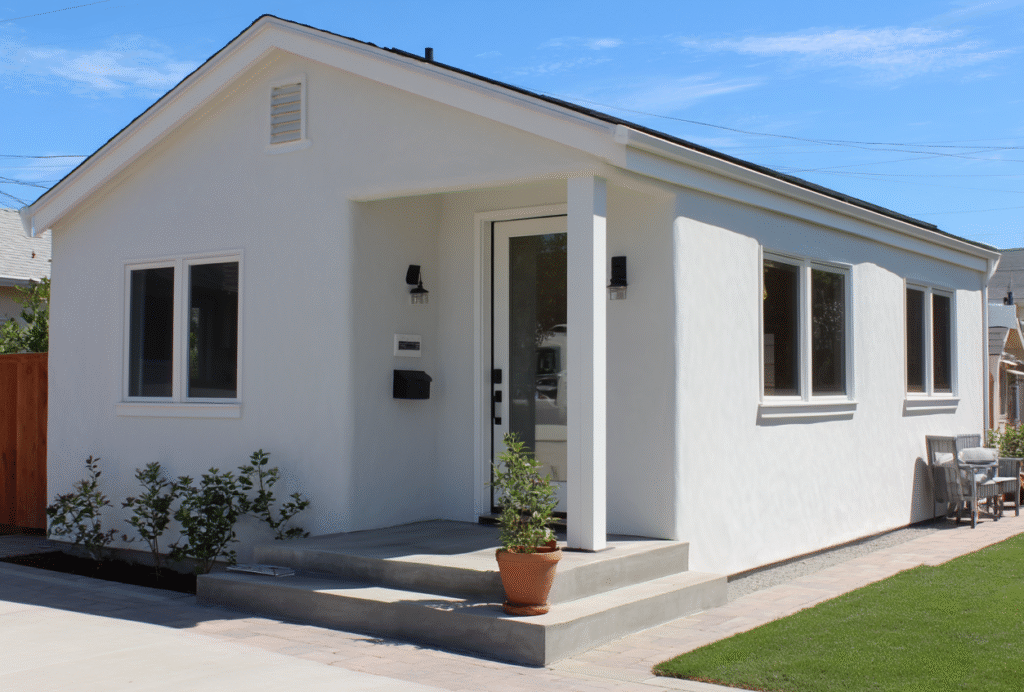
If you’re considering adding an accessory dwelling unit (ADU) to your property, you’ve likely come across the term “modular ADU” during your research. These prefabricated structures have gained attention as a seemingly quick solution for expanding living space, but understanding what they truly involve—and their limitations—is essential before making any decisions about your backyard investment.
What Is a Modular ADU?
A modular ADU is an accessory dwelling unit that’s primarily constructed off-site in a factory setting before being transported and assembled on your property. Unlike traditional construction where everything happens on your land, modular ADU solutions involve building sections or “modules” in a controlled environment, then shipping them to your location for final installation.
The concept sounds straightforward: pre-built sections arrive on flatbed trucks, get lifted into place by a crane, and connect together to form your new living space. Modular backyard ADU units typically come in standard sizes and configurations, with the factory construction process taking several weeks before delivery.
The Appeal of Modular ADU Designs
The modular construction industry markets several advantages that initially attract homeowners:
- Speed: Promises of faster completion times appeal to those eager to start generating rental income or house family members
- Minimal disruption: The idea of reduced on-site work sounds attractive when maintaining your daily routine
- Quality control: Factory-controlled construction theoretically ensures consistent results
- Predictability: Fixed timelines and standardized processes offer apparent certainty
Prefab modular ADU companies often showcase sleek designs and modern finishes in their promotional materials. The controlled factory environment theoretically allows for precision that weather-dependent outdoor construction can’t always guarantee. For homeowners in a hurry or those who want minimal interaction with the building process, modular ADU solutions can seem like an ideal answer.

The Hidden Challenges of Modular Construction
However, the reality of modular backyard ADU installation often proves more complex than the marketing suggests. Several factors can complicate what’s advertised as a simple, streamlined process.
Site Preparation Requirements
Important Note: The foundation and site work for modular units often costs as much as traditional construction, eliminating much of the anticipated savings.
Before any modular unit arrives, your property needs extensive preparation. The foundation must be perfectly level and precisely constructed to manufacturer specifications. Any deviation means the modules won’t fit together properly or could develop structural issues over time.
Critical site requirements include:
- Foundation leveled to within 1/8 inch across entire footprint
- Utility stub-outs positioned at exact specified locations
- Clearance for crane operation (typically 20-30 feet overhead)
- Load-bearing capacity verified for delivery vehicles
- All utility hookups pre-inspected and approved
This rigidity means you’re adapting your property to fit the module, rather than designing a structure that works with your land’s natural characteristics. Sloped lots, unusual property shapes, or existing landscaping features you want to preserve can all create complications that modular designs struggle to accommodate.
Transportation and Access Limitations
Getting large modular sections to your backyard isn’t always feasible. These units require wide, clear access paths for delivery trucks and cranes.
Properties that often can’t accommodate modular delivery:
- Narrow driveways (less than 12 feet wide)
- Overhead obstacles like power lines or tree branches
- Tight corner turns or curved driveways
- Limited street access or no crane positioning space
- HOA restrictions on large vehicle access
- Urban lots with limited staging areas
Some homeowners discover too late that their lot simply can’t receive the modules they’ve already ordered. Even when delivery is possible, the crane and truck rental, street closures, and specialized installation crews add significant costs that aren’t always transparent in initial quotes. The complexity of maneuvering pre-built sections into tight spaces can extend what should be a simple installation into a multi-day ordeal.
Customization Constraints
While modular ADU designs offer some finish selections, the fundamental layout and structure are largely fixed. Want to move a window to capture a specific view? Need an extra foot of width to fit your furniture? Prefer the bedroom on the opposite end? These modifications range from difficult to impossible with modular construction.
The pre-engineered nature that makes factory construction efficient also makes it inflexible. You’re essentially choosing from a catalog of predetermined options rather than creating a space specifically tailored to your property, lifestyle, and aesthetic preferences. For many homeowners, this one-size-fits-all approach feels limiting once they start planning how they’ll actually use the space.
Quality Control After Installation
Factory construction provides controlled conditions, but it doesn’t eliminate quality issues—it just moves when they’re discovered. Problems with modular units often don’t become apparent until after installation, when modules connect together. Seams between sections can develop leaks. Floor levels might not align perfectly. Wall finishes may show gaps where modules join.
More concerning, when issues arise, determining responsibility becomes complicated. Is it a factory manufacturing defect, a transportation problem, or an installation error? Multiple parties involved in the process can mean slower resolution when you need repairs or adjustments.

Why Many Homeowners Choose On-Site Construction Instead
As homeowners research deeper into modular ADU options, many ultimately decide that traditional on-site construction better serves their needs. Building on-site allows for complete customization to your property’s unique characteristics. The structure can work with your lot’s topography rather than requiring extensive grading or foundation work to accommodate pre-built modules.
On-site construction adapts to your specific requirements and preferences. Want higher ceilings in the living area? Need a custom closet configuration? Prefer a particular window placement to maximize your view or privacy? These adjustments happen naturally during the building process rather than requiring expensive modifications to pre-built modules.
Local builders working on-site develop an intimate understanding of your property. They can adjust as conditions require, optimize for your local climate and building codes, and ensure every detail aligns with your vision. The finished ADU feels integrated with your main home and landscape because it was designed specifically for that location.
The Value of Local Expertise
Working with local builders who construct on-site also provides benefits that extend beyond the initial build.
Why local builders make a difference:
- Intimate knowledge of regional building codes and permit processes
- Established relationships with local inspectors for smoother approvals
- Understanding of which materials perform best in your climate
- Ability to respond quickly for future maintenance or modifications
- Investment in your community’s economy and reputation
- Personal accountability to local customers and word-of-mouth referrals
They understand regional building codes intimately, have established relationships with local inspectors, and know which materials perform best in your area’s climate. When future maintenance or modifications are needed, you’re working with builders familiar with your structure who can easily return to your property.
Local construction companies also contribute to your community’s economy and typically provide more responsive service than distant modular manufacturers. The relationship doesn’t end when construction finishes—you have an ongoing connection with builders invested in your long-term satisfaction.
Making the Right Choice for Your Property
Every property and homeowner situation is unique. While prefab modular ADU options work for some scenarios, understanding their limitations helps you make an informed decision. Consider your lot characteristics, customization desires, budget for both obvious and hidden costs, and how much flexibility you want throughout the process.
The most successful ADU projects typically involve careful planning, clear communication with your builder, and construction methods that accommodate your specific situation rather than forcing your property to conform to predetermined constraints. Whether you’re adding rental income, creating space for family, or building a home office, the construction approach you choose significantly impacts both the building experience and your long-term satisfaction with the result.
Taking time to explore all your options—including both modular ADU solutions and traditional on-site construction—ensures you select the approach that truly serves your goals. The right choice balances your timeline, budget, customization needs, and property characteristics to create a backyard ADU that enhances your property value and meets your needs for years to come.
Your ADU represents a significant investment in your property and lifestyle. Making sure the construction method aligns with your priorities, rather than simply accepting what seems quickest or easiest, leads to better outcomes and fewer regrets down the road. As you move forward with planning, consider which approach gives you the flexibility, quality, and integration with your property that will serve you best in the long term.