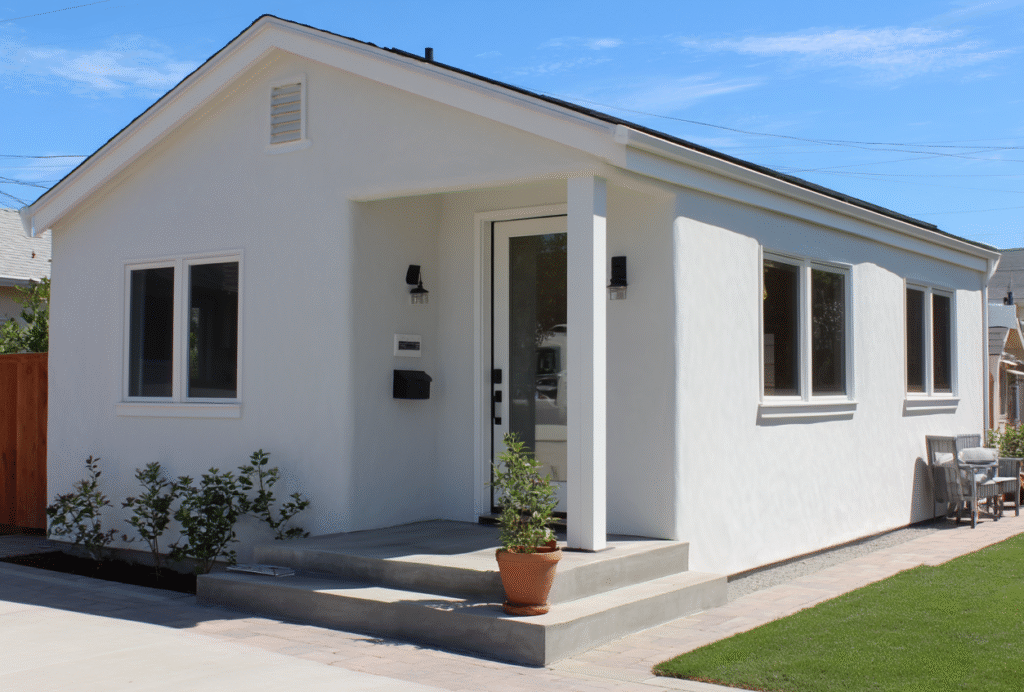
When planning an ADU in Florida, one of the most important zoning considerations involves setback requirements. Setbacks determine how close a structure can be built to property lines, neighboring homes, and public streets. These rules help maintain safety, privacy, and proper spacing between buildings. Understanding setback regulations is essential before designing or submitting plans for an accessory dwelling unit in Florida.
What Setbacks Mean for ADU Construction
In simple terms, a setback is the required distance between a structure and the boundary of the property.
For homeowners building a backyard ADU in Florida, setbacks typically apply to three sides of the property:
- the front property line facing the street
- the rear property line
- the side property lines
These distances ensure that buildings remain safely spaced apart and that utilities, drainage systems, and emergency access can function properly.
Typical ADU Setback Distances
Although exact regulations vary between cities, many Florida ADU zoning codes follow similar setback ranges. Front setbacks for residential properties often fall around 20 to 25 feet, ensuring that structures remain aligned with the established street pattern of the neighborhood. Side setbacks are usually smaller – often around 5 feet – allowing homes to maximize usable space while still maintaining separation between neighboring buildings. Rear setbacks may fall somewhere around 10 to 15 feet, although this can change depending on zoning districts and lot sizes.
Detached vs Attached ADU Setbacks
The type of ADU also influences which setback rules apply. An attached ADU, built as an extension of the main house, usually follows the same setback requirements as the primary structure. Because it is considered part of the main residence, it must respect the same property line distances. A detached ADU, however, is often treated as an accessory structure. In some cases, accessory structures are allowed slightly different setback requirements, particularly along the rear of the property. These distinctions can affect where a backyard guest house in Florida can realistically be placed.
Special Cases: Waterfront and Environmental Zones
Certain properties in Florida may face additional setback requirements due to environmental regulations.
Homes located near wetlands, lakes, canals, or coastal areas may require larger buffer zones between structures and natural features. These protections help preserve environmental systems and reduce flood risks. Because of this, setback requirements for Florida ADUs can sometimes vary significantly depending on the geographic location of the property.
Why Setbacks Are Important
Setback rules are designed to protect both homeowners and neighborhoods.
They help ensure:
- proper drainage and stormwater flow
- safe distance between buildings
- access for maintenance and emergency services
- privacy between neighboring properties
Ignoring setback rules during the planning stage can lead to permit denials, costly redesigns, or construction delays.
Final Thoughts
Setback requirements play a critical role in determining the layout of an ADU in Florida.
Before beginning the design process, homeowners should review local zoning regulations or consult professionals familiar with Florida ADU permitting and construction.
With the right planning, setback rules can be incorporated smoothly into the design, allowing homeowners to create a functional and attractive backyard ADU that fits both the property and the neighborhood.
Types of ADUs We Specialize In
At Goshen Tiny Homes, we specialize in a variety of Accessory Dwelling Unit designs tailored to meet the diverse needs of Florida residents. Here’s a glimpse of our specialized services:
Detached ADUs: Standalone units that provide privacy and independence for occupants.
Attached ADUs: Expanding your living space by adding units directly to your existing home.
1-Bedroom ADUs: Efficient homes designed for people who want a balance of privacy, function, and style.
2-Bedroom ADUs: A practical option for families who want extra flexibility for guests, children, or parents.
Financing Options: Explore practical ways to fund your ADU project with greater clarity and confidence.
For more detailed information, please visit our FAQs section to understand our process and discover how we can help you create the perfect ADU for your property in Florida.
Also you can check more information here:
• https://goshentinyhomes.com/
• https://goshentinyhomes.com/adu-models/
• https://goshentinyhomes.com/adu-gallery/
Usefull information about laws:
• FL Comprehensive Plan / smart growth framework
• FL ADU statute §163.31771 (floridadep.gov)