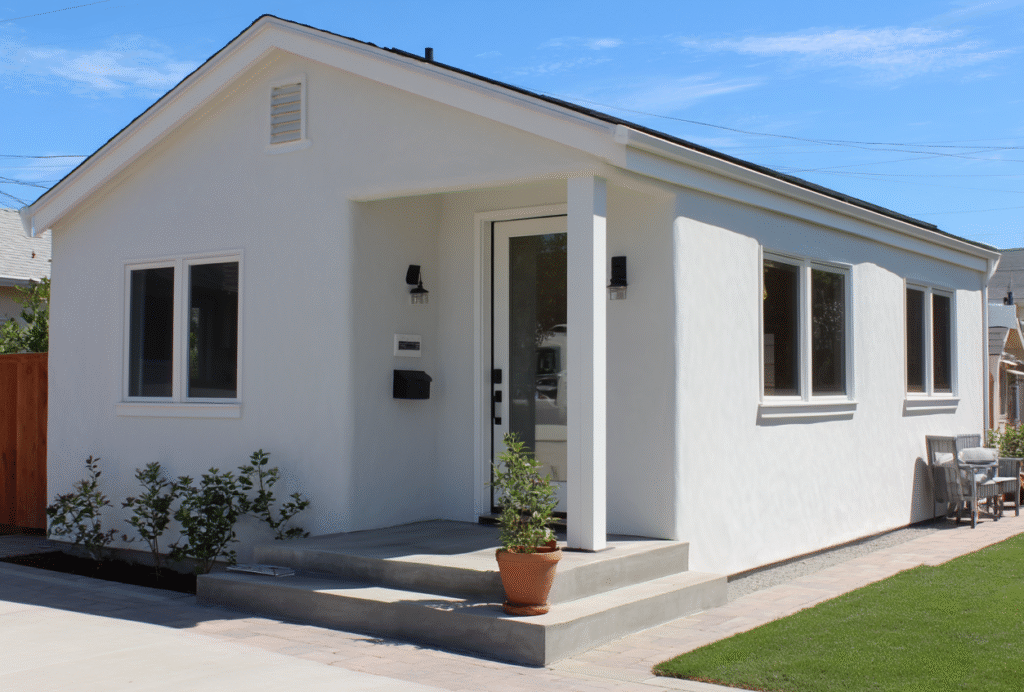
Choosing between an attached and detached Accessory Dwelling Unit can significantly impact your property’s functionality, costs, and long-term value. Both options offer unique benefits and challenges that depend on your specific situation, budget, and goals. Understanding the key differences helps you make an informed decision that serves your needs for years to come.
The Growing Popularity of ADUs as Flexible Housing
Accessory Dwelling Units have become increasingly popular as homeowners seek ways to maximize their property value and create flexible living spaces. Whether for aging parents, adult children, rental income, or home offices, ADUs provide practical solutions to modern housing challenges.
The fundamental choice facing homeowners is whether to build an attached ADU that connects to the main house or a detached unit that stands separately on the property. An attached ADU shares at least one wall with the primary residence and may have interior access. Detached units are completely separate structures, though they share the same property. Each approach offers distinct advantages depending on your priorities, available space, and intended use.
Key Differences Between Attached and Detached ADUs
Understanding the core differences helps clarify which option suits your situation better.
Space and Layout Considerations
An attached ADU typically requires less total land area since it shares walls and foundation with the existing home. This makes it ideal for properties with limited yard space. You can often convert existing spaces like garages, basements, or add onto the side or back of your home. Detached units need enough yard space for a separate structure plus required setbacks from property lines.
Layout flexibility differs between the two. Attached units work within the constraints of the existing home’s footprint and structure. Detached ADUs offer complete freedom in layout and orientation since they’re not confined by the main house’s design.
Privacy and Separation
Privacy varies significantly between attached and detached options. An attached ADU shares walls with the main house, which can transmit sound and create a closer proximity between occupants. While good insulation and soundproofing help, complete acoustic separation is harder to achieve than with detached units.
Detached ADUs provide clear physical separation between dwellings. This matters greatly if you’re renting the unit or housing family members who value independence. Separate entrances, no shared walls, and physical distance create natural boundaries.
Zoning and Permitting Requirements
Local regulations often treat attached and detached ADUs differently. Some jurisdictions have more lenient requirements for attached units since they’re considered home additions rather than new structures. Permitting timelines and complexity can vary, with attached units sometimes moving through approval faster in some areas.
Construction Costs and Timeline
Cost differences between attached and detached ADUs depend on multiple factors. Attached units often cost less initially since they share walls, foundation, and roof with the main house. They can connect to existing utilities more easily, reducing infrastructure costs.
Detached ADUs need complete foundations, all four walls, and full roofing. They require separate utility connections from the main house to the new structure. These factors increase upfront costs but provide a clearer project scope without surprises from integrating with existing construction.

Advantages of an Attached ADU
Several benefits make attached units attractive for many homeowners.
Cost and Efficiency
An attached ADU typically costs 20-30% less than comparable detached units. Shared walls, foundation, and roof reduce material and labor costs significantly. You’re not building an entire structure from scratch, which saves money across multiple construction phases.
Existing infrastructure provides additional savings. Connecting to the main house’s electrical panel, water lines, and HVAC systems costs less than running entirely new utilities. In some cases, you can extend existing systems rather than installing separate ones.
Integration with the Main Home
Physical connection to the main house offers convenience, especially for family members who need proximity. Aging parents can have their own space while remaining easily accessible. Young families might use an ADU attached to the house as a nanny suite or extended family quarters where quick access matters.
Interior access between the main house and attached ADU creates flexible living arrangements. During family visits, the space functions as an extra bedroom. When rented, you can lock interior doors to create separation.
Energy Efficiency and Shared Utilities
Energy efficiency improves when units share walls and systems. Less exterior surface area means less heat loss in winter and heat gain in summer. Shared insulation in common walls benefits both spaces. One efficient HVAC system might serve both the main house and attached ADU, reducing overall energy consumption.
Utility bills are often lower for attached configurations. One meter for electricity, one for water, and shared internet connections reduce monthly costs.
Advantages of a Detached ADU
Detached units offer different benefits that appeal to many homeowners.
Privacy and Independence
Complete separation provides maximum privacy for both the main house and ADU occupants. No shared walls mean no sound transmission. Separate entrances eliminate the need to pass through common areas. This independence makes detached units ideal for rentals or housing family members who want autonomy.
The physical distance creates psychological separation, too. Occupants feel like they have their own homes rather than extensions of someone else’s space. This distinction matters for quality of life and relationship dynamics.
Flexibility in Design
Detached ADUs offer complete design freedom. You’re not constrained by the main house’s architecture, though complementary design usually looks better. You can orient the structure to maximize views, sunlight, or outdoor space.
Architectural creativity flourishes with detached units. Want a modern tiny home behind a traditional house? A detached ADU makes this possible. Complete design independence lets you create unique spaces that reflect different tastes or purposes.
Potential for Future Expansion
Detached structures can be expanded more easily than attached units. Adding a room or extending the footprint doesn’t involve complicated integration with the main house. Future modifications only affect the ADU itself, simplifying both planning and construction.
This flexibility matters if you’re unsure about long-term needs. Start with a smaller, more affordable detached ADU and expand later if needed.
Rental Income Potential
Detached ADUs typically command higher rental rates than attached units. The privacy, independence, and separation appeal to renters willing to pay premiums. They feel more like standalone homes than auxiliary spaces, which expands your potential tenant pool.
Property management is simpler with detached rentals. Separate utilities mean tenants can pay their own bills. Clear physical boundaries reduce conflicts. If rental income is your primary goal, detached units often provide better financial returns despite higher construction costs.

Which is Right for You? Choosing Between Attached and Detached ADUs
The best choice depends on your specific situation and priorities.
Consider Your Budget
If minimizing upfront costs is your priority, an attached ADU usually makes more financial sense. The shared infrastructure and reduced construction scope provide substantial savings. This matters particularly if you’re financing the project and want to keep loan amounts manageable.
However, consider long-term value too. Detached units often increase property values more than attached ones due to their flexibility and privacy. Higher initial costs might be justified if you’re thinking about eventual resale or rental income potential.
Assessing Your Space Availability
Limited yard space often determines the decision. Properties with minimal outdoor area can’t accommodate detached structures once you factor in setbacks and maintaining usable yard space. An attached ADU makes sense when space constraints eliminate detached options.
Conversely, if you have ample property and want to preserve yard space near the main house, a detached unit placed farther back on the lot might work better.
Long-Term Goals and Flexibility
Think about how your needs might evolve. If you’re housing elderly parents temporarily, an attached ADU provides convenient proximity during their stay. When circumstances change, the space converts to other uses while remaining integrated with your home.
For long-term rental income or maximum future flexibility, detached units often prove more valuable. They appeal to more diverse users and maintain higher value over time. The separation makes them viable for various purposes: rentals, guest houses, home offices, or adult children’s residences.
Consider the attached ADU ideas that suit your lifestyle. Maybe you want a music studio, art workspace, or home gym that benefits from being close to the main house but somewhat separated. Or perhaps you need a guest suite for frequent visitors that feels connected yet distinct.
Making the Right Choice for Your Property
Both attached ADU and detached configurations offer valuable benefits. Attached units provide cost efficiency, convenient integration, and work well on limited lots. They suit homeowners prioritizing budget, family proximity, or existing space conversion. Detached units excel in privacy, design flexibility, rental income potential, and long-term value.
Evaluate your property realistically. Walk your lot and visualize both options. Could an attached unit work with your home’s layout? Do you have adequate space for a detached structure while maintaining usable outdoor areas? Consult with architects or builders who can assess your specific situation.
• FL ADU statute §163.31771